
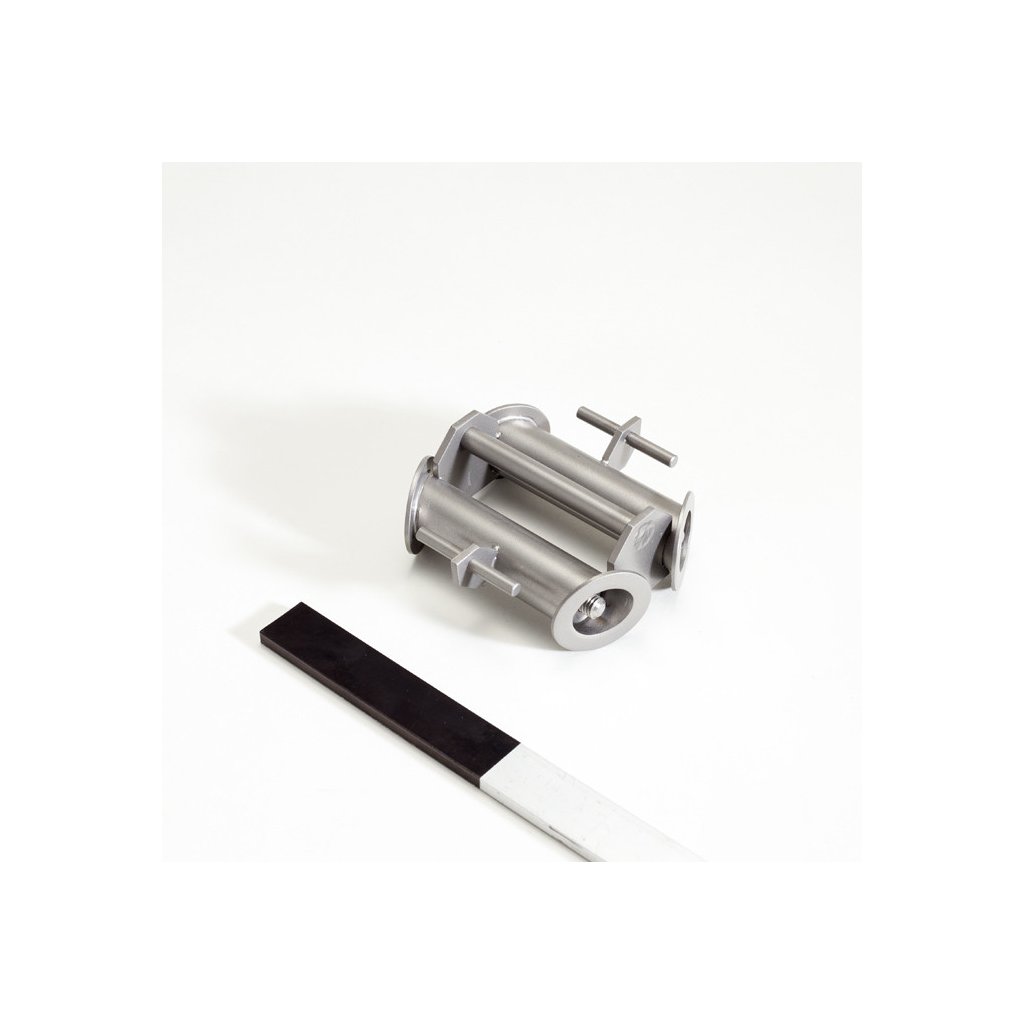
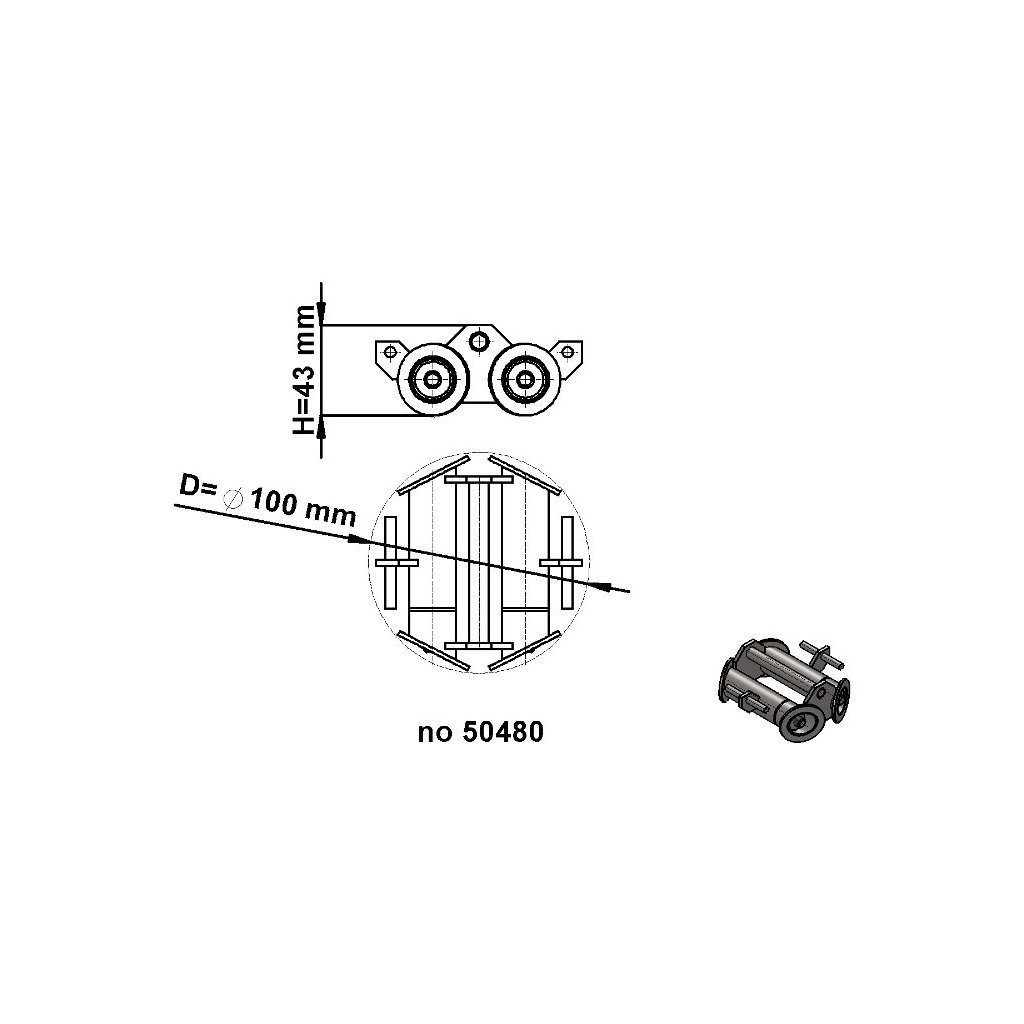


A hopper magnet (sometimes also referred to as a magnetic grate) is intended exclusively for industrial use, ensuring perfect cleaning of your dry mixtures from ferromagnetic contaminants (by ferromagnetic contaminants we mean fully magnetic metals such as iron, nickel, cobalt, and iron-containing alloys, not paramagnetic, very weakly magnetic materials). It is designed for use in round hoppers so that it perfectly follows the inlet into the subsequent technological equipment.
For proper operation, the mixtures being cleaned (the material you pour through the magnetic grate) must be:
- homogeneous
- dry with good flow properties so that it does not clog (flood/overload); see further below.
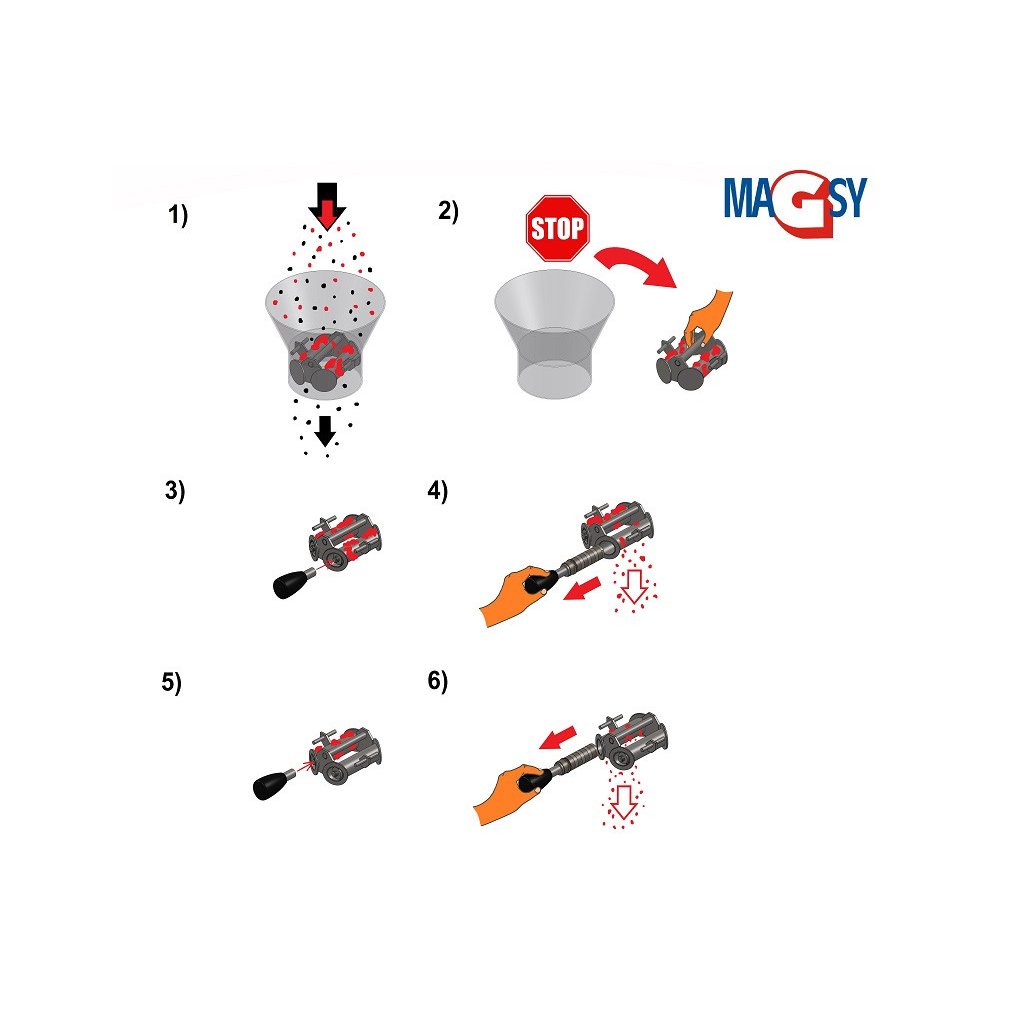
A hopper magnet (magnetic grate) is suitable for use only in non-continuous operations (during manual cleaning, the flow of the cleaned material must be stopped). It is installed only in vertical hoppers; the pipe must be horizontal (if vertical installation is not possible, do not use this product and contact us to identify another hopper magnet or a different magnetic separator, or to confirm suitability of use), e.g. in the food, chemical, plastics industries, in agriculture, in the waste-processing industry, or in the production of building materials—see the list of suitable materials below.
A hopper magnet is used as a pre-stage to protect technologies so that ferromagnetic metal contaminants do not enter devices they could damage, such as mill knives, crusher knives, nozzles of regranulation and granulation lines, injection molding nozzles, extrusion presses, pressing machines, shredders, fine sieves, ceramic presses, glass presses, etc. Anywhere material accumulates in a hopper before the technology. It can also be used for cleaning the mixture to the highest possible purity, where the grate is placed at the end of the production process just before packaging and dispatch, so that no further contamination by ferromagnetic metal material occurs during subsequent operations in the plant (e.g., during manual packaging via auxiliary hoppers). In this case, immediate sealing of the cleaned material into sealable packaging or other sealable containers is assumed. Thanks to a well-designed magnetic circuit and a flow-through labyrinth created by the spreading circular steel, a high capture rate of ferromagnetic contaminants is achieved (please read the detailed description below of what ferromagnetic metal contaminants this magnetic grate can capture).
The grain size (fraction, size) of the cleaned material may be up to a maximum diameter of 3 mm (3x3x3 mm), with a regular shape. The material must be free-flowing, dry, non-sticky, and without lumps, so that the magnetic grate does not become overloaded (clogged) by the material. When freely flowing, it must not have bridging (arching/clumping into solid masses) behavior, self-retain, or prevent free flow through this hopper magnet. Examples of such poorly flowing materials may be wet or greasy materials, but also materials that appear dry and seemingly free-flowing, yet naturally flow poorly. One such example is smooth, very finely milled flour or various very finely milled starches. The materials we recommend and which, in our expert opinion and experience, are suitable for pouring (cleaning) through this hopper magnet (magnetic grate) are listed below (please note the maximum permissible fraction/grain size above). If you do not find the material from which you require separation of ferromagnetic metal contaminants (material to be cleaned) in the list below, do not use this product and contact us for further clarification and possible recommendation of another magnetic separator/grate, or confirmation that this type is suitable for magnetic separation from your material.
List of suitable materials for magnetic separation using a magnetic grate:
- granulated sugar
- powdered sugar (be careful about overloading the material; we recommend feeding more slowly and distributing evenly over the entire area of the hopper magnet)
- cereals, various types
- lentils (with frequent use for large quantities of lentils, abrasion may occur; we point out possible faster wear of the protective tubes)
- crushed cocoa beans
- crushed PET bottles (be careful about overloading the material; we recommend feeding more slowly and distributing evenly over the entire area of the grate; rather suitable for smaller throughput quantities)
- rubber regranulate
- rubber crumb
- chia seeds
- animal feed, free-flowing, similar in character to flour up to coarser fractions but max. grain size 3 mm (must not be abrasive)
- coconut flour
- cocoa powder
- flour (be careful about overloading the material; we recommend feeding more slowly and distributing evenly over the entire area)
- poppy seeds (only poppy seeds, not whole poppy heads)
- ground corn
- meat-and-bone meal
- matcha powder
- custard powder (bridging and clogging may occur; feed slowly and evenly over the entire area)
- plastic granulate and regranulate
- plastic flakes (well crushed, without residual fibers)
- ash (not hot, but cooled to the working temperature of the magnetic grate)
- food-grade free-flowing non-abrasive mixtures
- powdered milk
- powdered chocolate
- desiccated coconut
- dried herbs
- dried spices (finely ground or very finely crushed)
- instant soup powders
- dried whey (be careful about overloading the material; we recommend feeding more slowly and distributing evenly over the entire area)
- sesame seeds
- enamel, i.e., glass frit (we point out increased abrasion and increased risk of wearing through the protective tubes)
- salt (we point out a possible shorter service life due to the material used; it depends on frequency of use)
- free-flowing starches, e.g. corn starch
- building materials (free-flowing and non-abrasive)
- tapioca pearls
We again emphasize that the materials must be dry, free-flowing (must not have bridging properties), non-abrasive, with a maximum regular granularity up to a diameter of 3 mm (3x3x3 mm). Throughput capacity varies depending on the material from which you require separation of ferromagnetic contaminants; it cannot be determined unambiguously and differs for each type of material. If you are unsure about throughput/permissible capacity, do not use this hopper magnet, contact our sales and technical department to recommend another type of magnetic separator, or to approve the use of this type.
Please note that the wall thickness of the protective tube is very small in order to achieve high magnetic induction (magnetic force) and pull-off force on its surface. Therefore, please also consider the height from which you will pour the material onto the hopper magnet (impact height). The height from which the material is poured onto the hopper magnet must not exceed 1 m. However, this is individual for each type of material. It is not possible to determine and prescribe exactly from what height each material should be poured. If poured from a great height, the protective tubes may bend or be punctured and the entire product may be damaged. If the height from which your material will be poured onto the hopper magnet is higher than 1 m, do not use this product and contact our sales and technical department to recommend another type of magnetic separator, or to approve the use of this type.
This hopper magnet captures (separates) ferromagnetic metal particles from a size of 1 µm and smaller (ferromagnetic in nature, unmeasurable, magnetic dust) up to a size of approx. 3 mm (3x3x3 mm), which is the maximum fraction (size) of material that may fall onto the hopper magnet and may be poured through it. In exceptional cases, this hopper magnet may also capture larger metal objects up to approx. 5 mm (5x5x5 mm). However, only accidental occurrence of these contaminants is assumed—max. up to 1% of the total hourly throughput of the poured material (regular cleaning of the magnetic grate from ferromagnetic contaminants is assumed; this does not mean that the entire 1% of larger ferromagnetic contaminants may remain on the hopper magnet for the whole time of pouring the hourly throughput). The content of these larger ferromagnetic contaminants must not be higher. If the occurrence of these larger ferromagnetic contaminants in your material is higher, do not use this hopper magnet and contact our sales and technical department for expert advice.
No objects larger than stated (max. diameter 3 mm, 3x3x3 mm) may fall onto the hopper magnet, except for ferromagnetic contaminants described above in accidental quantities. If you are concerned about the presence of larger ferromagnetic or other contaminants/impurities, it is necessary to install a sieve with a maximum mesh size of approx. 3 mm upstream so that these larger unwanted objects are captured before entering the hopper magnet (after installing the sieve, consider reducing the capacity load/throughput of the hopper magnet). The sieve is not included in the delivery of the hopper magnet. We also point out the possibility that your material may contain a large amount of fine metal contaminants (very fine magnetic metal dust smaller than 1 µm), which can coat the magnetic tubes and block the hopper magnet (fine magnetic particles also bind the conveyed material and overload the entire system). At the same time, the magnetic force/efficiency of the hopper magnet will be greatly reduced. If the magnetic tubes immediately become coated after starting the material flow through the hopper magnet and are completely “hidden” in iron dust, this is not a defect of the hopper magnet; magnetic separation must be strengthened with an additional magnetic separator or the hopper magnet must be cleaned more frequently—your material likely contains a very large amount of ferromagnetic particles.
If you are not able to ensure:
- absence of particles in your material larger than 3 mm in diameter (3x3x3 mm)
- less than 1% of larger ferromagnetic particles (up to 5 mm) in the hourly capacity
- minimal occurrence of fine metal dust in your material
do not use this magnetic grate and contact our sales and technical department to recommend another type of magnetic separator, or to approve the use of this type.
A hopper magnet is designed to capture as many ferromagnetic metal contaminants as possible. However, everything depends on the amount of these ferromagnetic contaminants present in your material. It is not possible to conclusively guarantee the capture of all ferromagnetic contaminants. It is always necessary to consider the specific technology and capacities. If needed, additional types of magnetic separation/magnetic grates/hopper magnets must be installed upstream or added. Please do not rely only on this single hopper magnet. If you are unsure, please do not use this type of hopper magnet and contact our experts in the field of magnetic separation at any time.
If you place the hopper magnet into your own structure (box, hopper, chute...) please note that such structures must not be made of metal (magnetic) material. There is a risk of injury and a significant reduction in magnetic force. All structures into which the hopper magnet is placed must be made of non-magnetic materials. The minimum distance of metal (magnetic) structures from the hopper magnet is 200 mm.
Do not use a hopper magnet to separate stainless steel (generally referred to as “stainless”), even if it appears magnetic/paramagnetic (for example after passing through various crushers or after other forms of deformation; likewise, such paramagnetic stainless steels may be used for manufacturing various sieves).
A hopper magnet is not intended for magnetic separation of non-ferrous, non-magnetic metals, nor for magnetic separation of parts or their components that contain ferromagnetic metals (e.g., plastic parts with pressed-in remnants of metal pieces, crushed window frames with remnants of metal strips, wood pellets with pressed-in fine wires...). If you also need to separate such ferromagnetic contaminants, do not use this hopper magnet and contact our experts in magnetic separation. They will advise which other magnetic separator to use or what type to add to your separation setup.
Please note that during cleaning of the hopper magnet, it is not possible to use pressurized water or to soak the magnetic cores. Only a dry cloth may be used for wiping, or well-dried compressed air for blowing off residual metal contaminants and separated material.
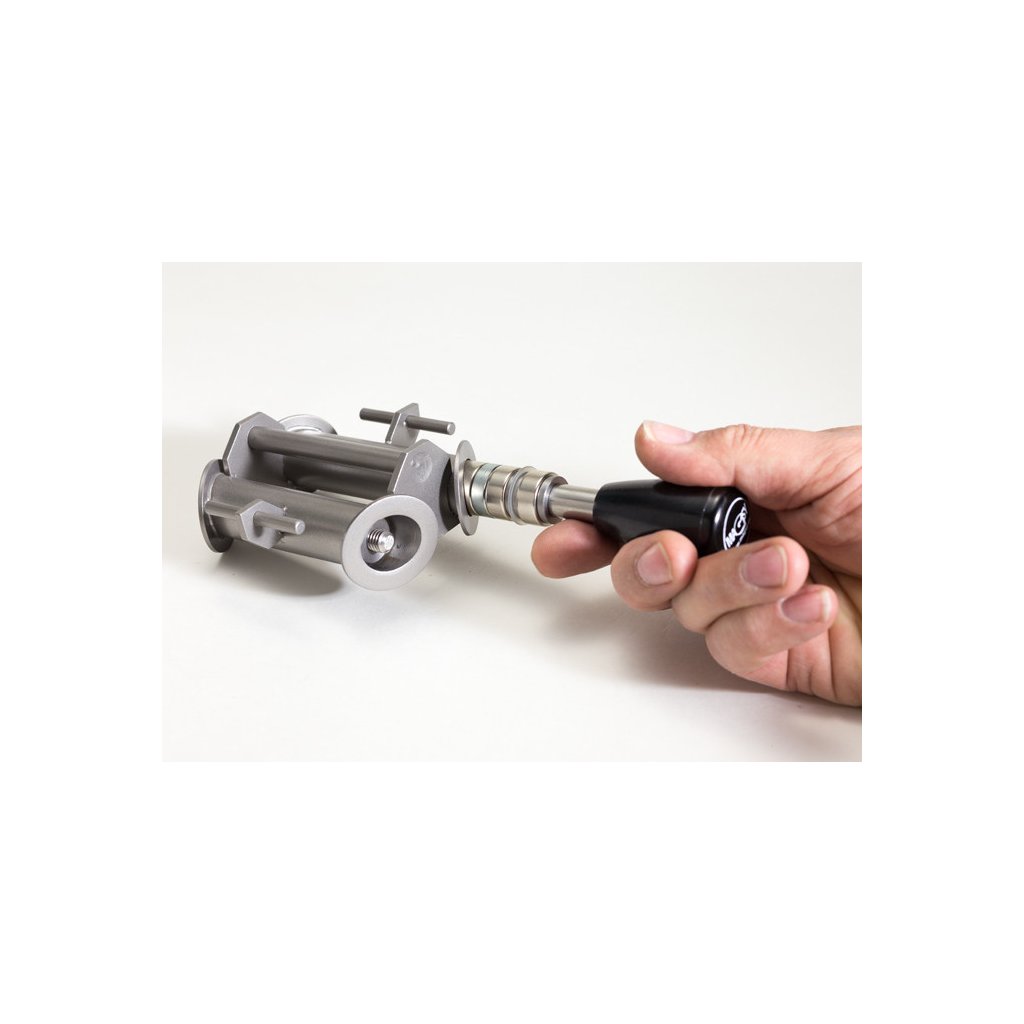
Be very careful when cleaning the hopper magnet; the magnetic cores are very strong and attaching them to metal objects may cause injury by pinching or snapping. Do not place them on anything magnetic (tables, workbenches, stair treads, floors...).
This hopper magnet is not intended for use in any environment classified as an explosive atmosphere (ATEX).
A hopper magnet is intended for indoor use only. Do not install it outdoors.
Procedure for measuring magnetic induction
The measurement is performed using a standard gaussmeter with a probe thickness of 0.75 mm at the point with the highest structural magnetic induction—at the pole pieces, i.e., at the lowest point of the arc of the magnetic circuit. We repeat the test 3 times, each time at a different point of the magnetic circuit, and calculate the average magnetic induction.
Procedure for measuring pull-off force
We measure using a polished steel reference standard with a diameter of 10 mm and a height of 20 mm. The measurement is performed at the point with the highest structural pull-off force—at the pole pieces, i.e., at the lowest point of the arc of the magnetic circuit. We record the force at which the reference standard detached. We repeat the test 3 times and calculate the average pull-off force.
For your information, 10 N = approx. 1 kg.
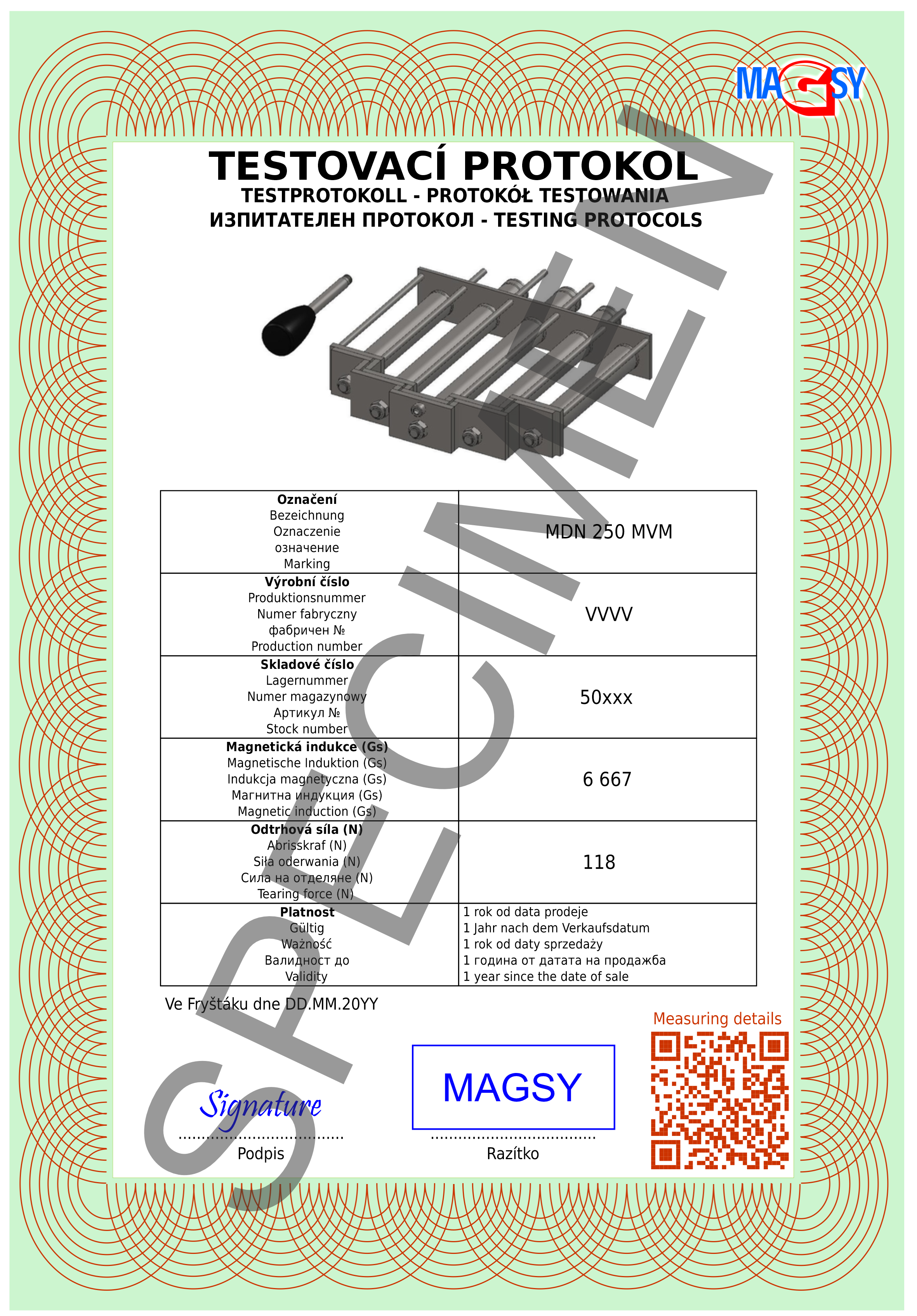
As confirmation of the measurement and a guarantee of the measured values, we issue—and include as part of the delivery of each magnetic separator—an original measurement report issued specifically for your particular hopper magnet (the report states the stock and production number).
Operating temperature:
from -20 °C to +80 °C (from -4 °F to +176 °F)
The hopper magnet is fitted with magnets with a temperature resistance of 80 °C. It can therefore be used up to this maximum operating temperature. Please note that in such a case the entire hopper magnet structure will heat up to such a high temperature. In this case, it is not possible to handle the hopper magnet while wearing ordinary work gloves; heat-resistant gloves must be used.
Exceeding the operating temperature may be possible in certain cases; however, it is important to realize that it may lead to impaired functionality of the equipment or a shortened service life. In such a case, consultation with the manufacturer is necessary to specify to what extent the equipment can be exposed to higher temperatures without damage and while maintaining safe operation.
WARNING:
The resulting pull-off force and magnetic induction depend on many factors—e.g., the dimensions of the reference standard, the air gap between the standard and the tested magnetic circuit, the thickness of the measuring probe, surface contamination, the surface finish of the standard, etc. The stated pull-off force and magnetic induction values were measured under ideal conditions given by the test environment. However, these values may change depending on the specific type of environment, where operating conditions and subsequent wear may affect the product’s efficiency and the measurement results. The stated values must therefore be considered indicative, and any deviations cannot be considered a defect. To determine the exact magnetic induction and pull-off force in a specific case, your own measurement must be performed. If the determined pull-off force values are not sufficient for you because they do not correspond to the stated values, you can use the guaranteed option to return the goods within 30 days under the conditions stated in the terms and conditions and purchase a different type of magnetic separator. These 30 days are intended precisely for testing the goods; after this period, the seller may refuse the return.
Copyright:
We do not agree, we do not wish, and we hereby do not grant anyone any consent to copy individual parts or the entire text. Rewording the text using identical phrases with resulting semantic similarity and matching our text is also prohibited. We do not wish and do not agree with any placement of our text anywhere on other websites, in professional magazines, studies, theses at secondary and higher education institutions without the prior consent of the company Magsy. If you require use of our text or any part of it, please contact us at any time.
Additional parameters
| Category: | Magnets for hoppers |
|---|---|
| EAN: | 8595133919272 |
| Average: | DN 100 |
| Weight (g): | 600 |
| Mass of the magnetic core: | 2 x 0,2 kg |
| Magnetic force on the tube: | 5.100 Gs |
| Magnetic force at a distance of 1 mm: | 3.600 Gs |
| Magnetic force in the distance. 5 mm: | 1.590 Gs |
| Material: | Stainless steel DIN 1.4301 / AISI 304 / CSN 17240 |
| Breakaway force on the tube: | 50 N |
| Number of magnetic rods: | 2 |
| Surface treatment: | Glass bead blasting |
| Version: | Standard |
| Magnetic rod diameter: | 22 mm |
| STATUS OF PRODUCT: | New |
| Temperature resistance of the magnet: | 80 °C |
| Magnet type: | Neodym (NdFeB) |
| Suitable for the food industry: | YES |
Video
Be the first who will post an article to this item!